
Conscious design for better living.
Well-being begins in the place you live.

Living in a small space can be exhausting.
There is never enough storage. Surfaces fill up quickly. Things seem to multiply, and clutter comes back even when you try to keep it under control.
Not everyone gets to choose a home with extra square footage. And not everyone wants their home to look like a perfectly staged photograph.
How to organize small spaces is not really about making a small home look perfect. It is about making it work better.
It is about reducing friction, finding things more easily, moving around without constantly navigating obstacles, and creating a home that supports the way you actually live.
This is not a philosophy of living with less.
It is about making sure that what you own does not weigh you down.
How to Organize Small Spaces Step by Step
You do not need to organize your entire home in one day.
You need a method that is simple enough to follow and realistic enough to maintain.
Step 1: Empty the Space to See What You Really Have
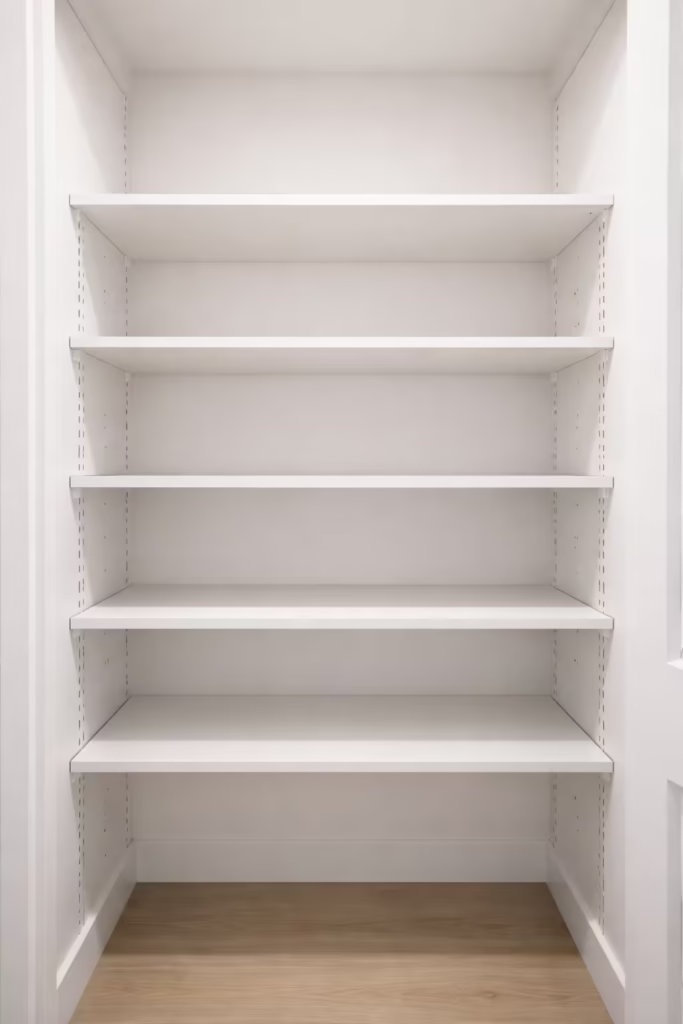
Before organizing anything, create some clarity.
Take everything out of the area you are working on. Empty drawers. Clear shelves. Remove everything from the surface.
Once the space is empty, it becomes much easier to see what you actually have—and how much of it you really use.
Sort everything into four simple categories:
- Keep
- Donate
- Recycle
- Discard
In a small home, every object competes for both physical space and attention.
If something does not serve a clear purpose, ask yourself whether it is taking up space you actually need.
This is not extreme minimalism.
It is simply making decisions about what deserves a place in your home.
Step 2: Define Clear Zones—Even Without Walls
Small homes often have to perform several functions at once.
The living room becomes an office. The dining table becomes a workspace. The bedroom may also become storage.
Instead of fighting this reality, organize it.
Create visual zones within the same room:
- A rug can define a seating area.
- A lamp can identify a reading or work corner.
- A low shelf can separate areas without completely closing them off.
When each activity has a place, the room feels less improvised and more intentional.
Step 3: Use Vertical Space Carefully
When floor space is limited, your walls become valuable.

Tall, narrow shelving can provide storage without taking up much floor area.
Floating shelves can replace bulky furniture.
Hooks behind doors can create additional storage without taking up another part of the room.
But vertical storage has a limit.
Too many shelves and too many objects on display can create visual noise.
The goal is not to fill every wall.
The goal is to free the floor.
Step 4: Organize by Frequency of Use
Not everything needs to be equally accessible.
A simple system is to organize belongings according to how often you use them:
- Daily-use items: keep them accessible.
- Occasional-use items: store them away.
- Seasonal items: keep them out of your everyday rotation.
When everything is visible and equally accessible, nothing really feels organized.
Separating belongings according to frequency of use reduces that sense of chaos and makes everyday routines easier.
How to Organize Small Spaces by Room
Every room creates different organizational problems.
The best solution is not necessarily the same throughout the home. Organize according to what each space needs to do.
Small Living Room
The main problem in a small living room is often visual overload.
Prioritize closed storage when possible. Reduce scattered decorative objects. Avoid allowing coffee tables and open shelves to become permanent storage areas.
The less visual competition there is in the room, the more stable and comfortable the space can feel.
Compact Bedroom
A bedroom needs clarity more than decoration.
Use the space underneath the bed for storage instead of adding bulky furniture whenever possible.
If space is particularly limited, floating nightstands can provide a useful surface without taking up floor space.
Keep only the essentials within easy reach.
A calmer bedroom often starts with reducing its visual weight.
Small Kitchen
Organization has a direct effect on everyday routines in the kitchen.
Use drawer dividers where they are useful. Add shelf risers inside cabinets. Group similar items together:
- utensils
- spices
- containers
- cleaning supplies
When everything has a designated place, cooking becomes simpler and putting things away takes less effort.
Small Bathroom
Bathrooms can become cluttered very quickly.
Limit the number of products that are actively in use. Group similar items together inside bins or baskets.
Keep countertops as clear as possible.
The simpler the system, the easier it is to maintain.
Common Mistakes When Organizing Small Spaces
A good organizational system can fail if it does not reflect how you actually live.
Some common mistakes include:
- Buying organizers before measuring the space
- Keeping things “just in case” indefinitely
- Mixing unrelated categories in the same container
- Creating systems that are too complicated
- Ignoring your real daily habits
The best system is not necessarily the most sophisticated one.
It is the one you can actually maintain.
How to Maintain Order Without Obsessing
Organization should make life easier, not become another source of stress.
You do not need perfection.
You need consistency.
A few simple habits can make a significant difference:
- Follow the “one in, one out” rule when appropriate.
- Set physical limits for storage.
- Spend a few minutes at the end of the day resetting surfaces.
- Review your belongings as the seasons change.
The goal is not to create a flawless home.
It is to prevent clutter from becoming structural.
The Real Impact of Organization in Small Spaces
Organizing does not create more square footage.
But it can reduce friction.
It can reduce visual overload.
It can reduce the time you spend looking for things.
And that alone can change how a space feels.
This is not about transforming your home into something completely different.
It is about making it work better.
And in everyday life, improvement is enough.
Frequently Asked Questions About Organizing Small Spaces
How can I organize small spaces without spending money?
Start by decluttering and rearranging what you already own.
The problem is often an excess of belongings rather than a lack of storage containers.
What is the best system for organizing a small home?
A combination of clearly defined zones and organizing belongings according to frequency of use is a practical and sustainable approach.
What furniture works best in small spaces?
Multifunctional furniture and vertical storage can help maximize available square footage without adding unnecessary visual clutter.
How do I keep clutter from coming back?
Reduce the number of new items coming into your home and maintain a short daily reset routine.
The goal is not to keep everything perfect.
It is to keep clutter from becoming part of the structure of everyday life.