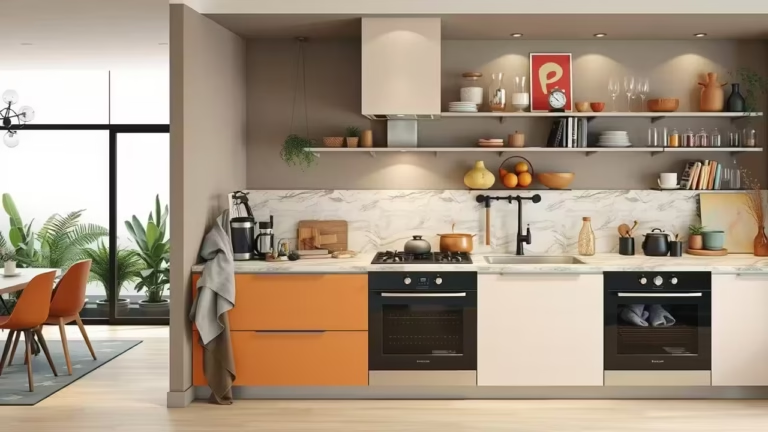
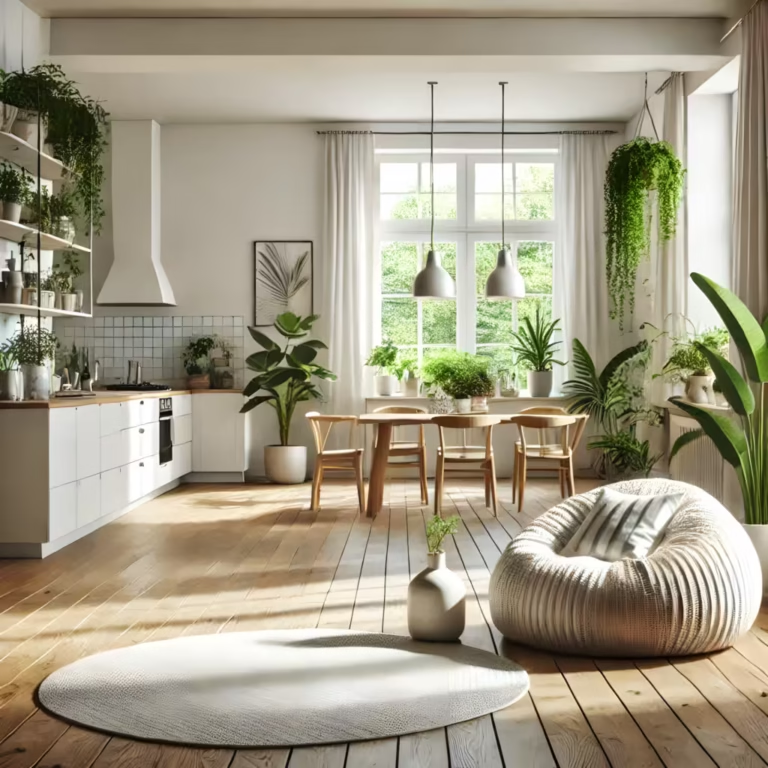
Integrated Living room: A Concept for Families Integrated living rooms have become increasingly popular, especially among families with young children. This design combines the living room, dining area, and sometimes the kitchen into one open space, promoting interaction and a…
Hygge, a Danish concept, embraces the art of creating comfort and finding joy in the simple moments of daily life. It offers an escape from life’s stresses, inviting you to enjoy a sense of calm and warmth, whether alone or…
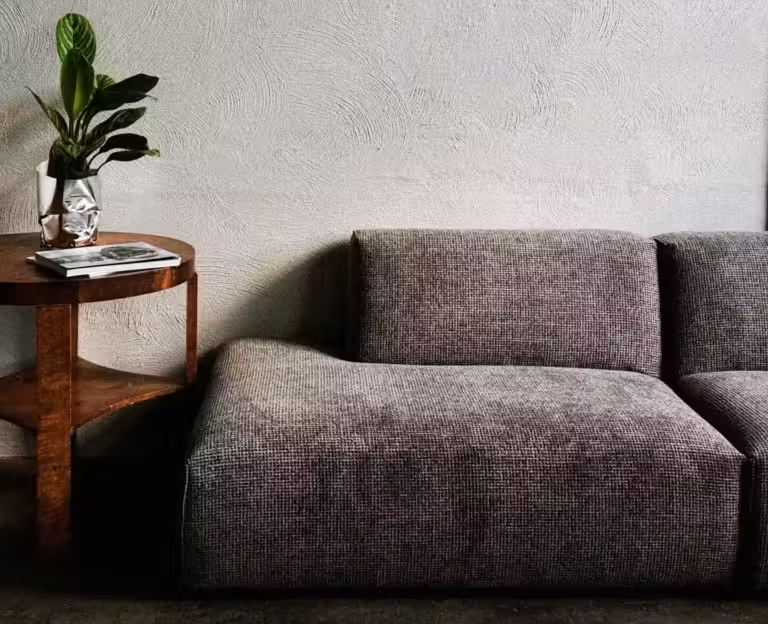
By: Olivia Smith It’s amazing how the furniture in your home—the pieces you once thought would make your life easier—can, over time, become a burden that limits the comfort and functionality of your space. A couple of years ago, I…
I’m Olivia Smith, and I want to share something that truly transformed my life. For years, I lived in a house that looked perfect on the surface—a pretty box with all the essentials: functional furniture, neutral-colored walls, and carefully placed…
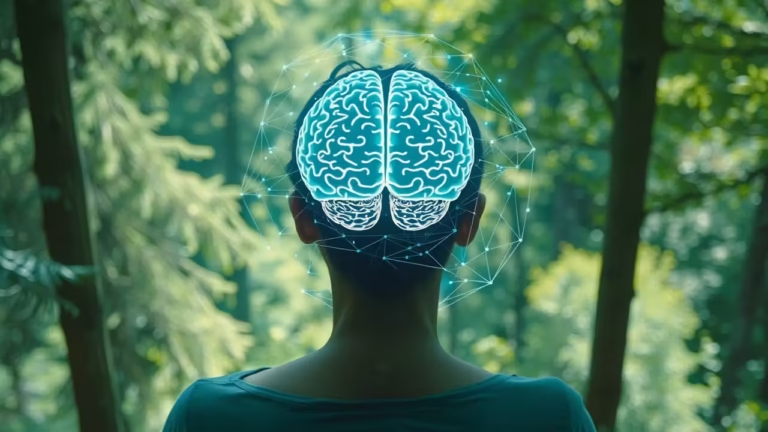
Designing Spaces That Speak to the Mind. Neuroarchitecture combines architecture and neuroscience to reveal how built spaces shape our brain, mood, and behavior. Neuro-interior design takes this further, applying these insights to interior spaces to create environments that enhance well-being.…
Neuroscience: Exploring the Foundations of Our Emotions and Behaviors Neuroscience, the study of how our nervous system works, has revealed how neural connections influence our emotions, thoughts, and behaviors. By analyzing brain cells and circuits, neuroscience helps us understand processes…
Neuroarchitecture, a discipline that unites architecture and neuroscience, seeks to design spaces that positively influence people’s brains and well-being. In small environments, this approach is especially useful for optimizing space so that it is functional, pleasant and generates feelings of…
Our sensory perception allows us to find our place in a space, while the brain uses surfaces and spatial systems to organize and make sense of the environment we inhabit. This process makes architectural spaces key elements of our memory.…