Conscious design for better living.
Well-being begins in the place you live.

Feng Shui is about balance, flow and comfort. In the living room, small decisions can block energy and reduce ease of use. Below you’ll find the most common mistakes—and simple, practical fixes you can apply today, including a quick way to use the Bagua map.
Overview: the most common Feng Shui mistakes
- Furniture arrangement that blocks circulation
- Sofa with its back to the entry
- Poorly placed mirrors
- Clutter and visible cables
- Cold or flat lighting (only one source)
- Imbalanced elements (wood, fire, earth, metal, water)
- Tech dominating the room’s focal wall
Layout that blocks circulation
Problem: Furniture cuts the natural path between the entry and the seating area, creating a jarring “collision” when you walk in.
Fix: Clear traffic routes first. Group seating in an L or U shape that supports conversation, and anchor the zone with a rug that doesn’t spill into walkways. Keep side tables within easy reach so people don’t have to cross circulation paths to set things down.
Sofa with its back to the entry
Why it matters: Sitting with your back to the door can feel exposed and uneasy.
Fix: Ideally, orient the main seat so you can see the entry. If the room doesn’t allow it, create a visual back: place a slim console table, a low bench, or tall plants behind the sofa to provide a sense of support without blocking movement.
Poorly placed mirrors
Problem: Mirrors that reflect clutter, cut through doors/windows, or bounce energy straight back out.
Fix: Aim mirrors toward natural light or an attractive view (art, a plant vignette, a bright window). Check reflections from both sitting and standing height. Avoid placing a mirror where it reflects disarray, cords, or a busy hallway.
Clutter and tech dominating the room
Problem: Open-shelf overload, remotes everywhere, and a TV wall that becomes the only visual story.
Fix: Edit surfaces weekly. Use trays or baskets for small items. Choose media units with closing doors to hide devices. Route cords through adhesive raceways and use concealed power strips. Let books, art, or a plant arrangement share the focal wall so the TV isn’t the sole protagonist.
Cold, flat lighting
Problem: A single overhead fixture in a cool/blue tone creates glare and a flat mood.
Fix: Layer three types of warm light:
- Ambient: a ceiling fixture or soft-glow floor lamp.
- Task: reading lamps near seating, table lamps on consoles.
- Accent: wall washers, picture lights, or candles.
Dimmer switches help you shift intensity from day to night.
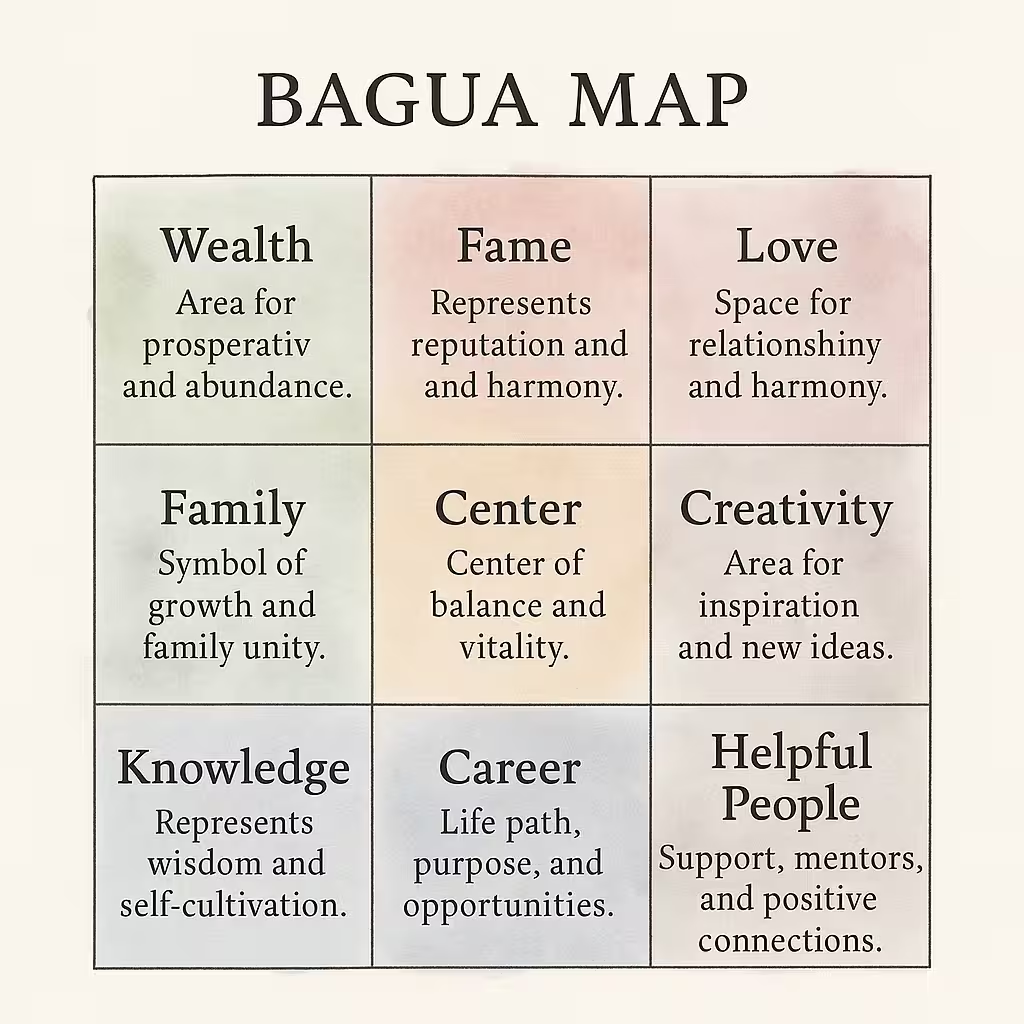
Bagua map in the living room: common mistakes and quick fixes
What is the Bagua map?
The Bagua is a simple Feng Shui energy map that divides a space into nine life areas (called guas). Think of it as a 3×3 grid you lay over a room to guide where to clear paths, add warm light, place meaningful objects, or create pairs. In Western homes, the most practical way to apply it is the BTB/door-aligned method: you align the bottom edge of the grid with the wall that holds the room’s main entry. This keeps it simple and explains why each adjustment goes in a specific spot.
Why it matters in a living room
The living room sets the tone for flow, connection and rest. Mapping the Bagua here helps you make changes that aren’t random—so each tweak supports how the room feels and works.
How to place the grid (1 minute)
- Stand at the living room’s main entry (the doorway you naturally use).
- Imagine a 3×3 grid over the room with the bottom row along the entry wall (BTB/door method—no compass).
- You now have nine areas (left → center → right; bottom → middle → top):
Bottom row (entry wall):
• Knowledge & Self-cultivation (bottom-left) • Career & Life Path (bottom-center) • Helpful People & Travel (bottom-right)
Middle row:
• Family & Community (middle-left) • Health & Center (middle-center) • Creativity & Children (middle-right)
Top row (far wall):
• Wealth & Prosperity (top-left) • Fame & Recognition (top-center) • Relationships & Love (top-right)
Living-room actions for each area (do 1–2, keep it light)
• Knowledge (BL): Small reading nook—one current book + a tidy lamp.
• Career (BC): Keep the entry-to-sofa path clear; avoid obstacles.
• Helpful People (BR): Welcoming side table/tray; stash chargers/remotes neatly.
• Family (ML): One meaningful photo or heirloom; add wood (frame/bowl/side table).
• Health / Center (MC): Keep the center open; rug flat; warm ambient light.
• Creativity (MR): Games basket or playful accent; leave breathing space.
• Wealth (TL): One healthy plant or warm lamp; avoid broken/dusty items.
• Fame (TC): A single piece you love, softly lit (no glare, no trophy overload).
• Relationships (TR): Work with pairs (two cushions, two candles); soft textiles.
2-minute quick start (four moves)
• Clear the entry-to-sofa axis (Career).
• Place a healthy plant in top-left (Wealth).
• Add a warm accent light to highlight a loved piece in top-center (Fame).
• Create a pair in top-right (Relationships)—two cushions or two frames.
Common mistakes (and the fix)
• Using the whole-home Bagua on the room → Use the room-level grid only.
• Rotating/mixing methods → Pick BTB/door alignment and stick to it.
• “Activating” with clutter present → Declutter first, then add one subtle cue.
• Overloading Wealth, ignoring Center → Improve 2–3 areas max; keep center open.
• Mirrors multiplying mess → Aim mirrors at light, plants or a pleasing view—never clutter.
If your living room has two entries
Choose the primary entry (the one you and guests use most). Align the bottom row to that wall and keep placements consistent.
Bottom line
Place the grid by the entry wall, clear paths, add warm light, use pairs where it makes sense, and keep the center open. Small, consistent tweaks beat big, complicated overhauls.
Imbalanced elements
Problem: An overemphasis on one element (e.g., lots of metal and glass) can make the room feel harsh; too much earth can feel heavy.
Fix: Bring balance with gentle contrasts: wood furniture or woven textures (wood), a soft throw or candlelight (fire), ceramics or sandy tones (earth), limited metallic accents (metal), a small tabletop fountain or imagery of water (water). Avoid literal excess; subtlety reads better than theme-park styling.
What not to do (quick list)
- Block natural pathways between the entry and seating
- Hang mirrors that reflect clutter or cut doors/windows
- Rely on a single cool overhead light
- Let cables and devices dominate the focal wall
- Overload one Bagua area and forget the center
Fix-it checklist (do these today)
- Clear the entry–sofa axis; group seats in an L or U
- Give the main seat a view of the entry or add a visual back
- Aim mirrors at light or a pleasing view
- Hide cables with raceways; store devices behind doors
- Add three layers of warm light; dim in the evening
- Apply the BTB Bagua quickly and tune 2–3 areas with subtle changes
- Schedule a weekly 15-minute edit of surfaces
FAQ
What’s the most common living-room mistake?
Blocking circulation between the entry and the seating area. Clear that path first.
How should I position the sofa?
Ideally facing the entry. If not possible, add a visual back with a console, screen, or tall plants.
Where should mirrors go?
Where they reflect natural light or a pleasant view—never clutter or a door/window cut.
How do I use the Bagua without overcomplicating it?
Use BTB: align the grid’s bottom with the room’s entry wall, divide into 3×3, then improve two or three areas with small, meaningful adjustments.
What lighting works best?
Three warm layers—ambient, task, and accent—ideally on dimmers to adapt across the day.

[…] May Be Of Interest To You Portada » Articles » Is Your Furniture Feeling Inconvenient, Not Meeting Your Needs? […]