
Conscious design for better living.
Well-being begins in the place you live.

Singapore wasn’t designed from a place of comfort — it was built out of urgency.
The need to respond quickly to very real problems — housing, employment, social cohesion — ended up shaping a city where almost nothing is left to chance.
That starting point isn’t just a historical detail; it’s the key to understanding why its urban model is so influential today. In Singapore, architecture didn’t evolve as a purely formal exercise or an isolated aesthetic pursuit. It became a direct tool for organizing everyday life.
The real question was never just how to build housing, but how to make a diverse society work within a limited territory without falling apart.
From Housing Crisis to Urban System
When the government, through the Housing and Development Board, began mass housing production in the 1960s, the goal was straightforward: eliminate informal settlements and relocate people into decent living conditions.
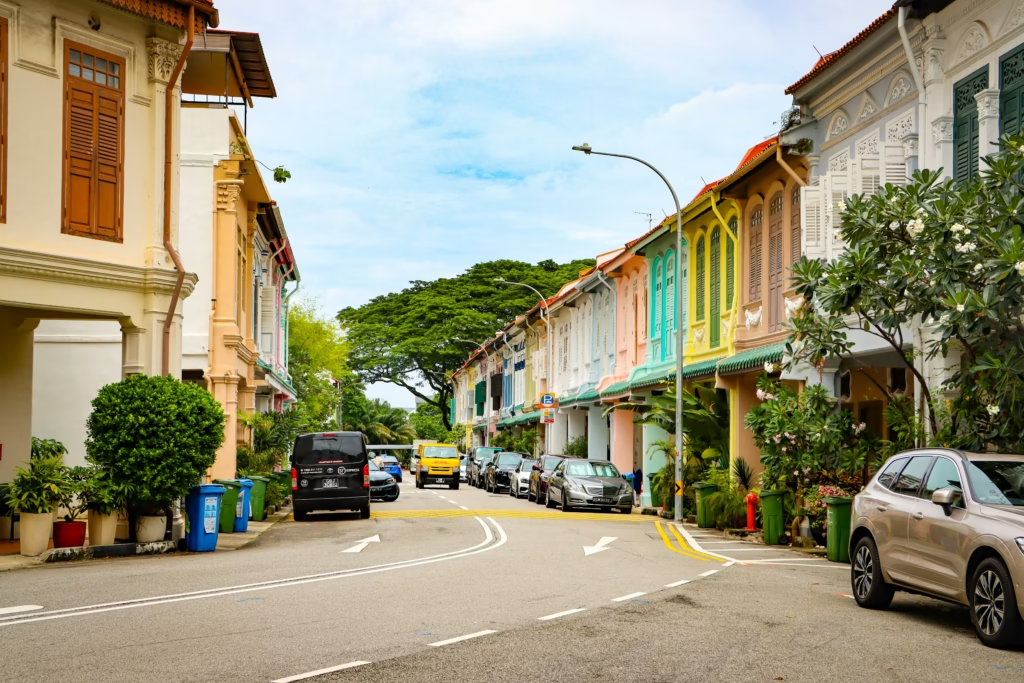
But the solution went far beyond putting up buildings.
From the beginning, each development was conceived as part of a larger structure. Housing was integrated with transportation, commerce, education, and essential services. This approach avoided one of the most common mistakes seen elsewhere: building residential units disconnected from urban life.
Over time, this logic evolved into a model where living doesn’t simply mean occupying a private space, but participating in a complete urban ecosystem. That idea has since influenced developments around the world attempting to bridge the gap between housing and city life.
Quality as Policy, Not Privilege
One of the most significant shifts in Singapore’s model was breaking the long-standing association between public housing and poor quality.
Here, quality wasn’t treated as an upgrade — it was built into the system from the start. Units were designed with cross-ventilation, strong natural light, and durable materials, reducing both physical wear and environmental stress.
Ongoing maintenance and regular upgrades prevented the kind of gradual decay that has stigmatized public housing in many other countries.
The result was a major cultural shift: public housing stopped being a last resort and became a legitimate, even desirable, residential option.
Globally, this forced a rethinking of the State’s role in city-making. Public architecture was no longer seen as a minimum standard, but as essential infrastructure for everyday life.
Another key decision reinforced this logic: housing developments weren’t treated as isolated blocks, but as part of self-sufficient neighborhood units. Within or around them, essential services — retail, schools, childcare, healthcare, transit — are concentrated, reducing the need for long commutes and organizing daily life at a local scale.
Density Without Isolation
One of the biggest challenges in contemporary urbanization is how to maintain high density without producing social isolation.
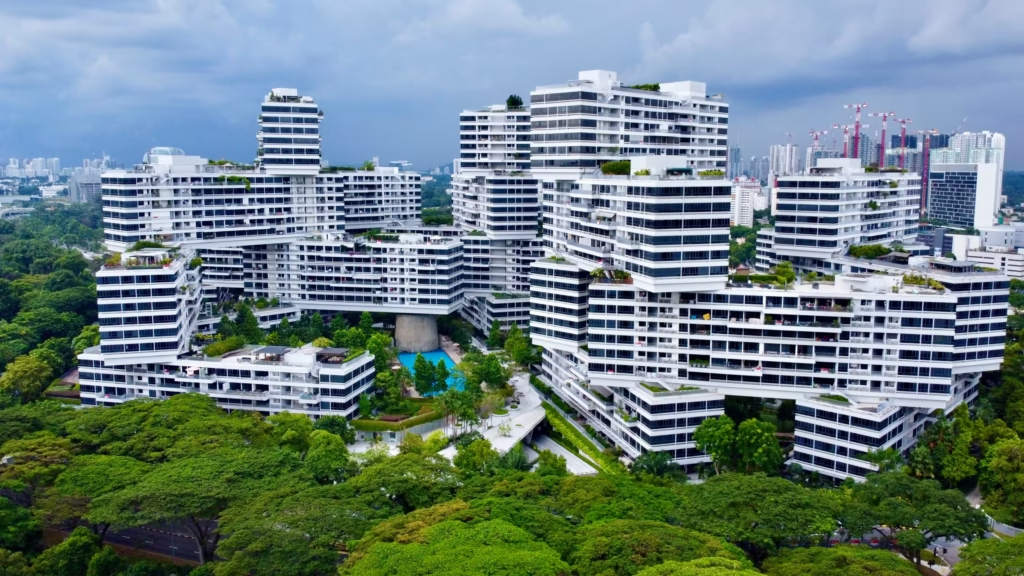
Singapore tackled this head-on by introducing layers of social interaction into the architecture itself.
Shared spaces — courtyards, playgrounds, gathering areas — aren’t afterthoughts; they’re central to the design. In many buildings, the ground floor is left open, creating what are known as void decks: flexible, informal spaces where daily life unfolds, from casual encounters to community events.
Between towers, pedestrian paths, plazas, and shared areas create additional opportunities for interaction.
This structure reduces the anonymity typical of high-rise living and recreates some of the social dynamics of traditional neighborhoods — just vertically.
From a perspective linked to neuroarchitecture, these environments support a sense of belonging and safety, counteracting the isolation often associated with large-scale residential developments.
Architecture, in this sense, doesn’t just house people — it shapes how they relate to one another, forming small vertical communities where interaction becomes part of everyday life rather than the exception.
Nature as Urban Infrastructure
In a high-density environment, greenery can’t be treated as decoration. From early on, Singapore embraced the idea of becoming a “garden city,” a vision that evolved into a more complex model where nature is layered throughout the built environment.
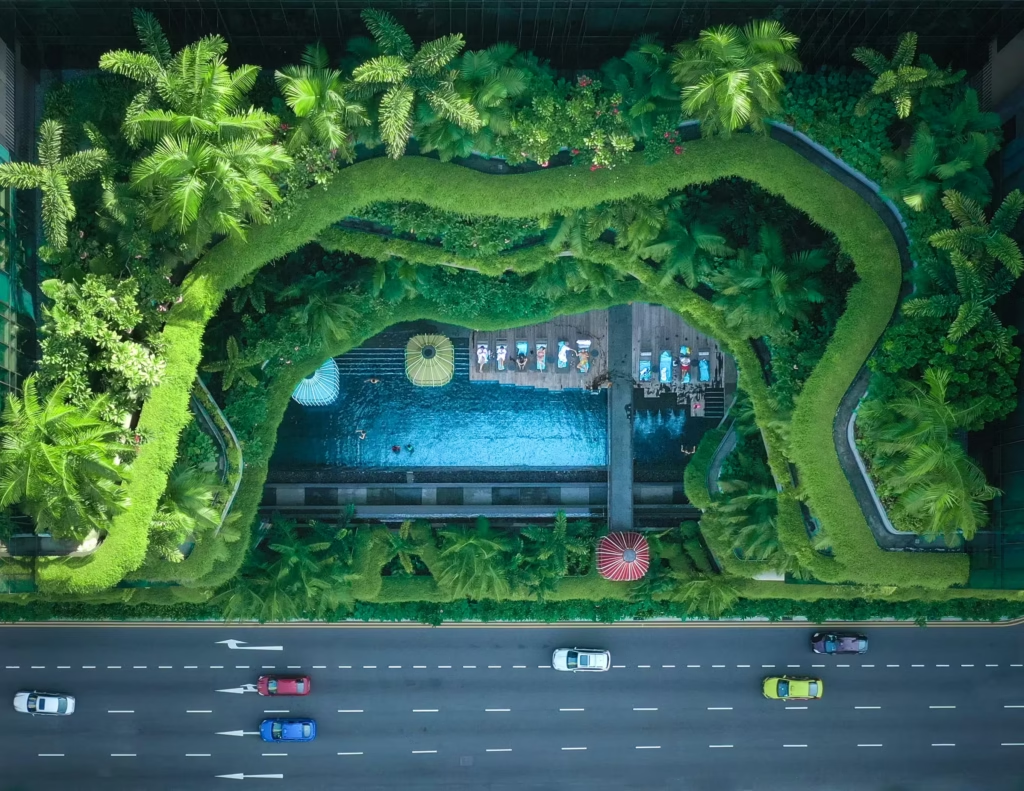
Sky gardens, green terraces, and planted corridors serve clear environmental functions: lowering temperatures, improving air quality, and making dense spaces more livable.
They also introduce sensory variation. Vegetation softens the urban experience, reshapes spatial perception, and creates moments of pause within continuous built form.
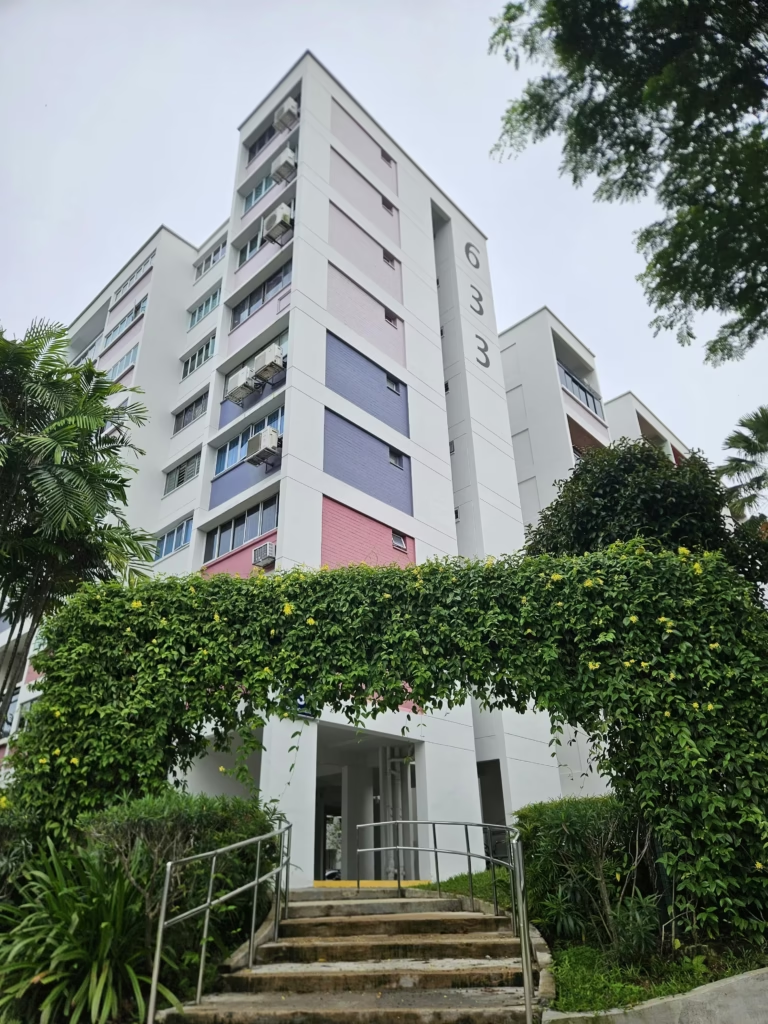
This aligns with the principles of biophilia — the idea that human well-being is closely tied to contact with natural elements.
Today, this approach has influenced residential projects worldwide, where integrating nature into vertical living is no longer experimental, but expected.
Social Mixing as a Design Strategy
In many cities, segregation is a byproduct of the market. In Singapore, the social composition of neighborhoods is deliberately managed.
Housing policies are designed to prevent the concentration of specific ethnic or economic groups in particular areas. As a result, each development reflects a diversity similar to that of the country as a whole.
This is not just a political decision — it’s spatial. Everyday proximity between different groups creates interactions that, over time, reduce tension and build shared identity.
Architecture becomes the physical framework of a broader social strategy. It doesn’t dictate behavior, but it creates the conditions that make certain behaviors more likely.
At a time when many cities are becoming increasingly fragmented, Singapore offers a concrete example of how urban design can support integration — organizing coexistence between differences without erasing them or letting them harden into conflict.
What’s interesting is not just that it intervenes, but how: not through direct imposition, but through the shaping of everyday environments. Proximity, shared spaces, and balanced access to services turn encounters from something occasional into something routine.
That quiet repetition — brief, informal interactions — builds familiarity over time. And familiarity reduces distance, making others more predictable and less threatening.
In that sense, cohesion doesn’t emerge as an abstract goal, but as the outcome of spatial conditions that make shared life possible.
There is, however, a limit. Design can support integration, but it can’t guarantee it. Social, economic, and cultural dynamics continue to operate within that framework. What Singapore demonstrates is not a perfect solution, but something more useful: when space is carefully structured, the chances of those dynamics playing out in less conflictive ways increase.
It’s not about designing cohesion — understood here as the ability to sustain stable relationships between different people — but about designing the conditions that allow it to emerge.
Planning as Anticipation
Another key pillar of the model is long-term planning.
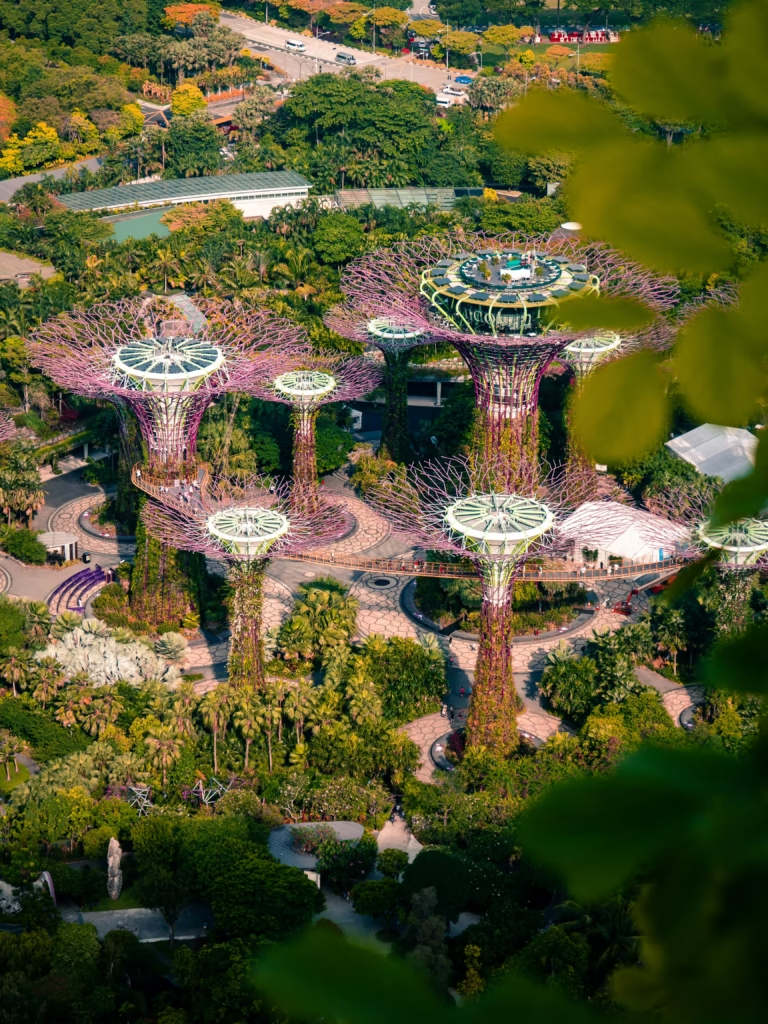
Singapore doesn’t grow randomly. Each district is developed through coordinated planning that aligns infrastructure, mobility, and services decades in advance. This prevents urban development from falling behind population growth.
Neighborhoods are structured so that most daily needs can be met within short distances. While the “15-minute city” concept has gained popularity recently, Singapore has been operating on similar principles for decades.
This level of foresight reduces friction in everyday life: shorter commutes, better accessibility, and a more balanced relationship between work, home, and leisure.
Designing Everyday Life
What sets Singapore apart isn’t any single element, but how everything connects.
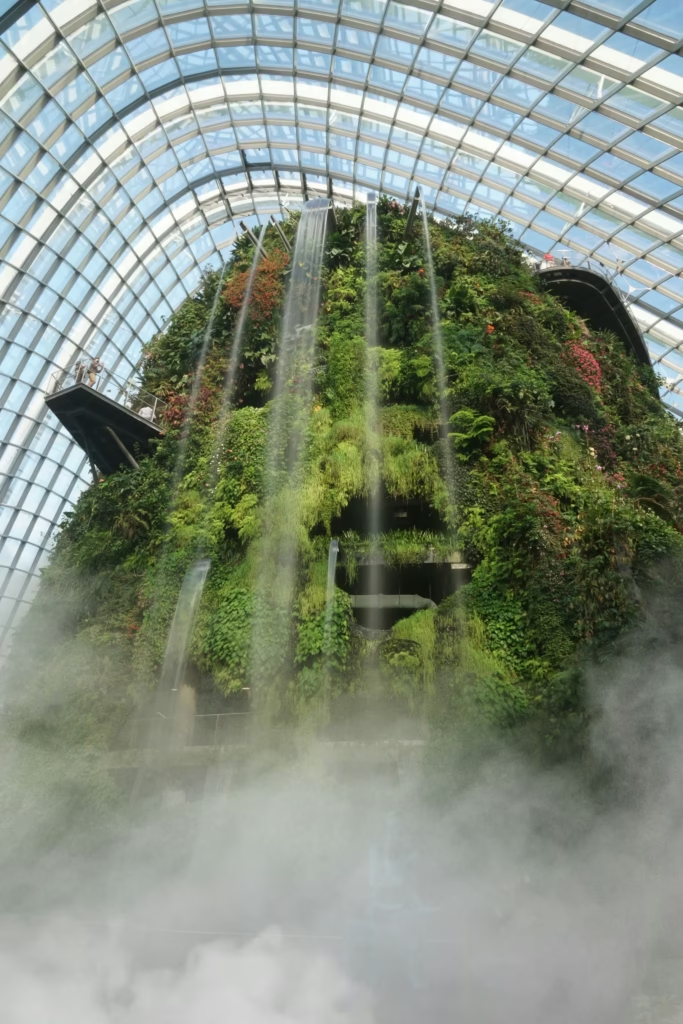
Housing, public space, infrastructure, nature, and social composition aren’t developed independently — they function as parts of the same system.
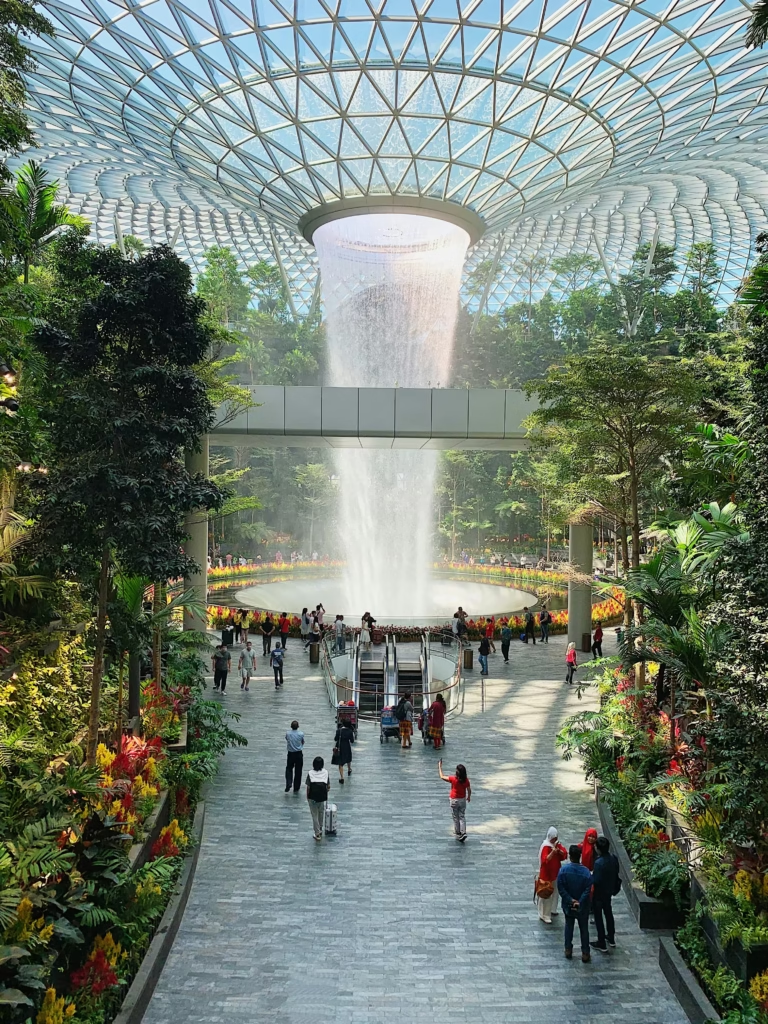
That coherence comes from its origin: urgency forced decisions where every element had to respond to a real problem.
As a result, what other countries try to replicate isn’t just architectural form, but a way of thinking — understanding that designing housing ultimately means designing ways of living.
At a time when cities are searching for models to deal with density, growth, and social fragmentation, Singapore remains a powerful reference. Not because it found a perfect formula, but because it showed that when architecture is directly tied to human needs, it can organize not just space, but the experience of living within it.